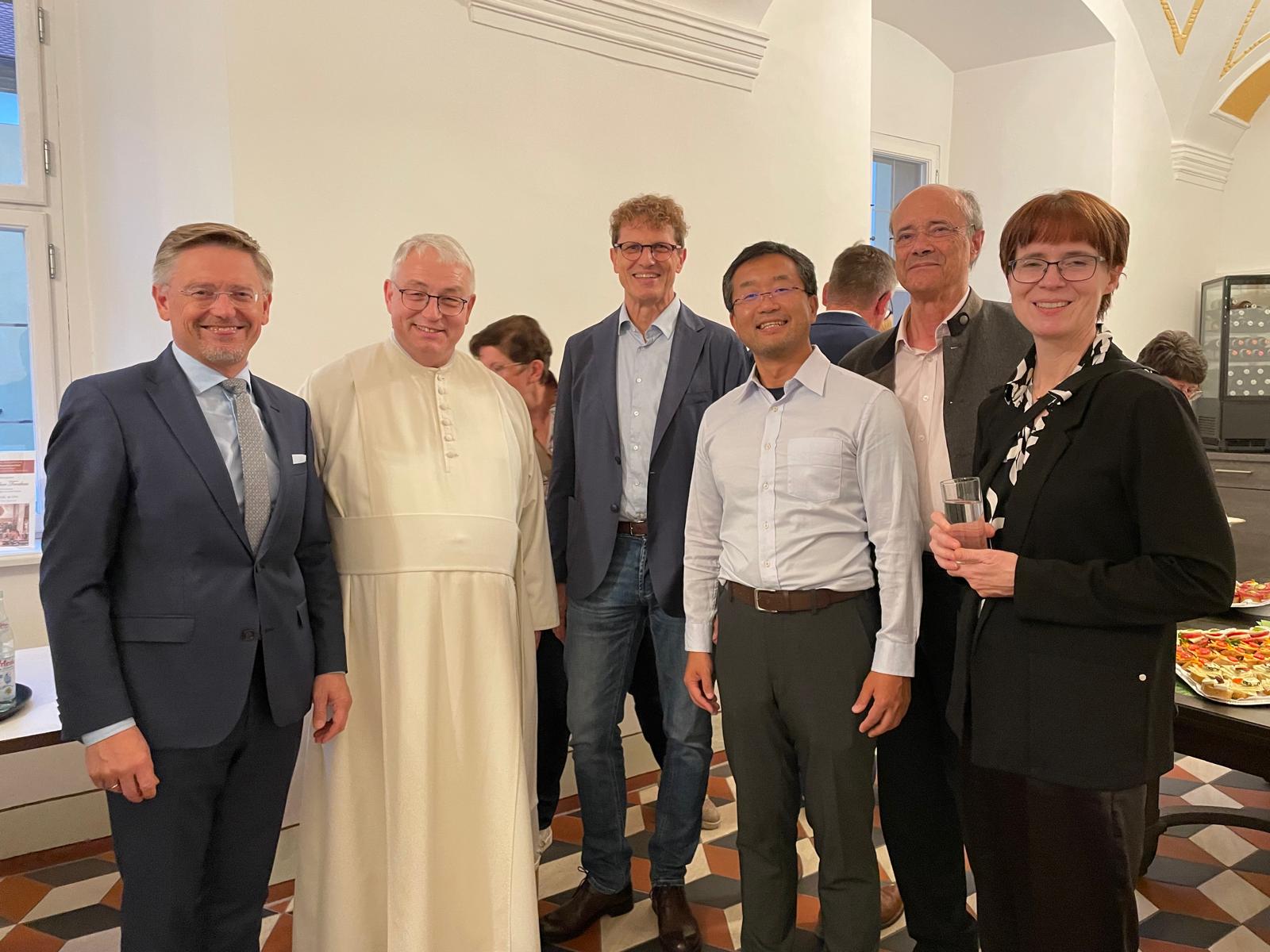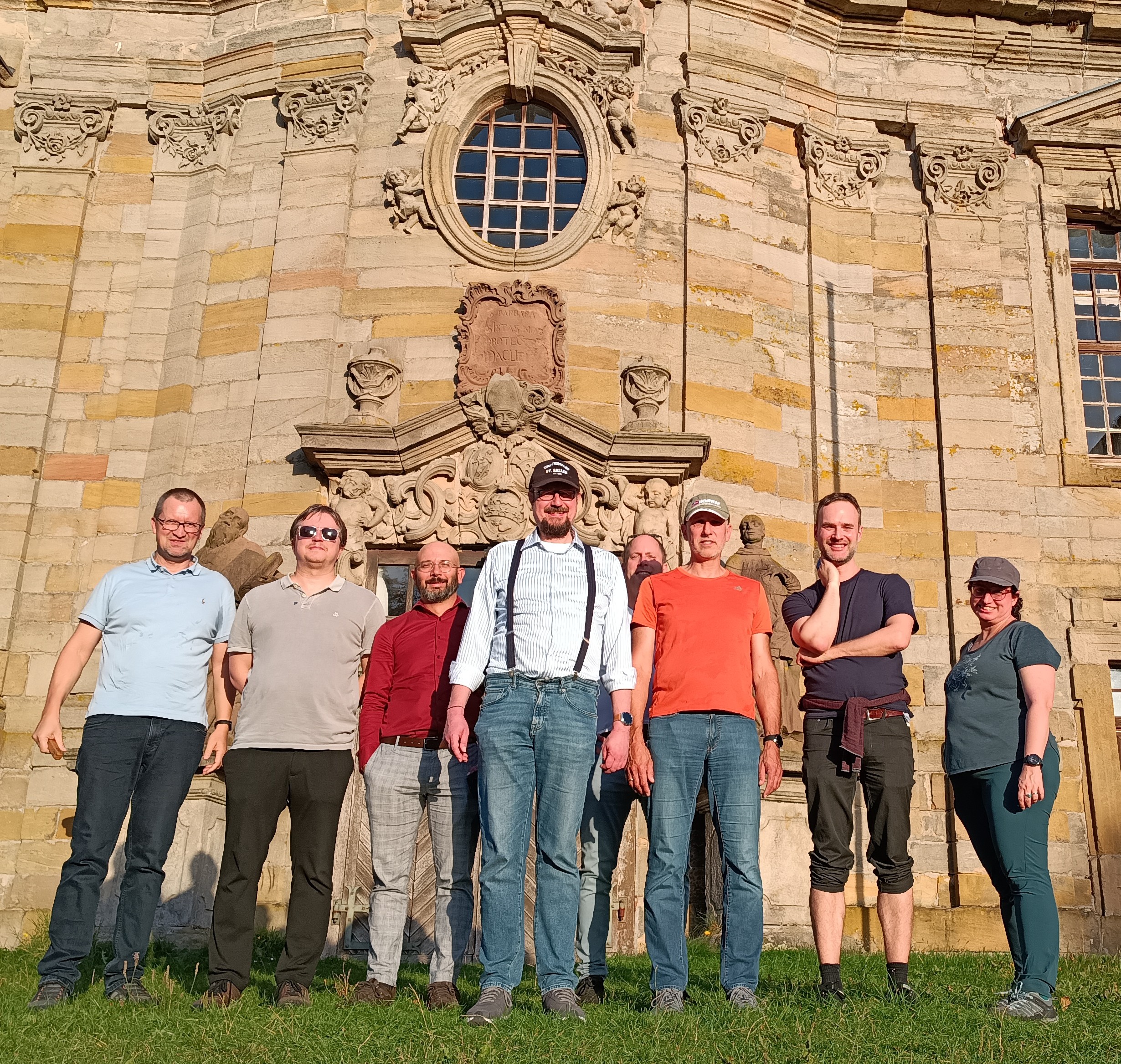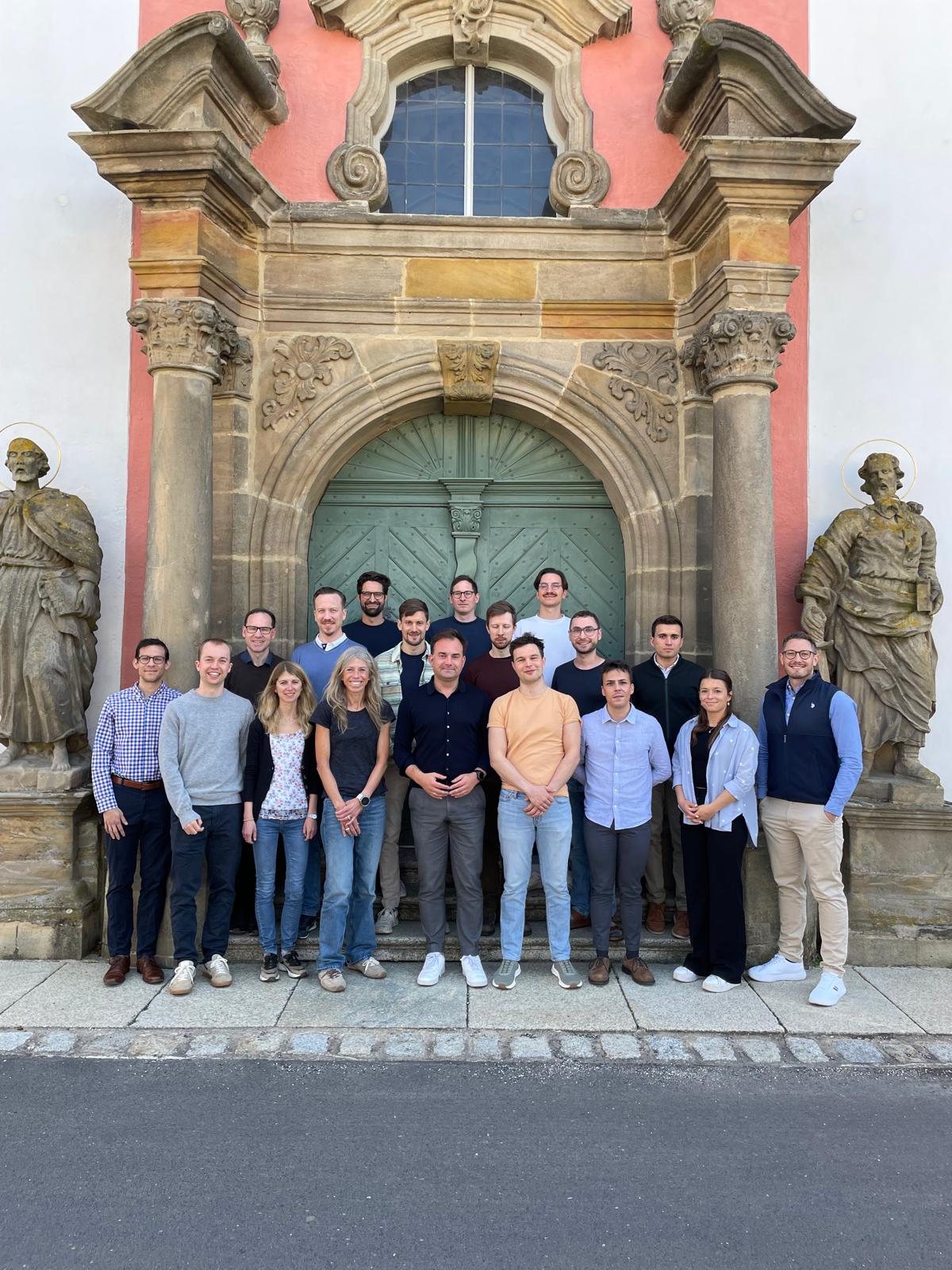
From May 17 to 20, 2026, the international scientific seminar “AI in Mechanics” took place at the Speinshart Scientific Center for AI and SuperTech in Germany. The event brought together leading researchers in computational mechanics, soft matter mechanics, and artificial intelligence. The seminar focused on new data-driven approaches for modeling, interpreting, and predicting the behavior of soft materials and biological tissues.
The seminar was organized by Hagen Holthusen, Denisa Martonová, Moritz Flaschel, Malte Rolf, Paul Steinmann, and Ellen Kuhl. The event was supported by the European Research Council (ERC) and Friedrich-Alexander-Universität Erlangen–Nürnberg (FAU).
Interdisciplinary Exchange Between AI and Mechanics
The seminar particularly brought together the two ERC Advanced Grant projects DISCOVERY and SoftFrac, both addressing key challenges in soft matter mechanics. While DISCOVERY, led by Ellen Kuhl, applies data-driven methods and machine learning to uncover fundamental laws governing living matter, SoftFrac, led by Paul Steinmann, focuses on modeling crack initiation and failure processes in soft materials.
Throughout the presentations, it became clear how strongly modern AI methods are increasingly integrated with physics-based modeling approaches. Key topics included:
- data-driven material modeling,
- physics-informed neural networks,
- uncertainty quantification,
- Bayesian inference,
- generative AI for material design,
- thermomechanical modeling,
- fracture mechanics of soft materials,
- biomechanical applications in medicine and surgery.
Internationally Renowned Speaker Line-Up
The seminar featured renowned researchers from Germany, the United States, France, and Belgium. Participating institutions included Columbia University, the University of Texas at Austin, KU Leuven, TU Dresden, TU Darmstadt, and several institutes of FAU Erlangen–Nürnberg.
The event particularly highlighted the strong international collaboration between mechanics, materials science, mathematics, and AI research, reflected both in the presentations and in the intensive scientific discussions.
Scientific Program Focused on Data-Driven Mechanics
The two-day scientific program included a total of 20 presentations as well as discussion and networking sessions.
The seminar opened with a presentation by Florian Marquardt from the Max Planck Institute for the Science of Light. Filippo Masi subsequently introduced new approaches for integrating thermodynamic constraints into data-driven constitutive models. Hagen Holthusen discussed the impact of AI on thermomechanics, while Ellen Kuhl presented generative AI approaches for material design.
Further contributions addressed:
- data-driven surrogate models for fluid-particle systems,
- neural constitutive models for dissipative and nonlinear behavior,
- database-driven material model identification,
- Bayesian neural networks,
- spline-based modeling approaches,
- interpretable Kolmogorov–Arnold networks,
- AI-supported surgical modeling,
- personalized biomechanical heart models based on multimodal MRI data.
A recurring theme throughout the seminar was the challenge of combining data-driven methods with physical interpretability. Discussions clearly demonstrated that future developments will rely heavily on hybrid approaches that merge classical mechanics with modern AI techniques.
Outlook
The seminar clearly demonstrated how strongly artificial intelligence is transforming modern mechanics and materials research. The presented work highlighted new opportunities to better understand complex material processes, quantify uncertainties, and develop predictive models for engineering and biomedical applications.
By closely connecting AI, data science, and physics-based modeling, “AI in Mechanics” provided important impulses for future research at the intersection of mechanics, materials science, and artificial intelligence.