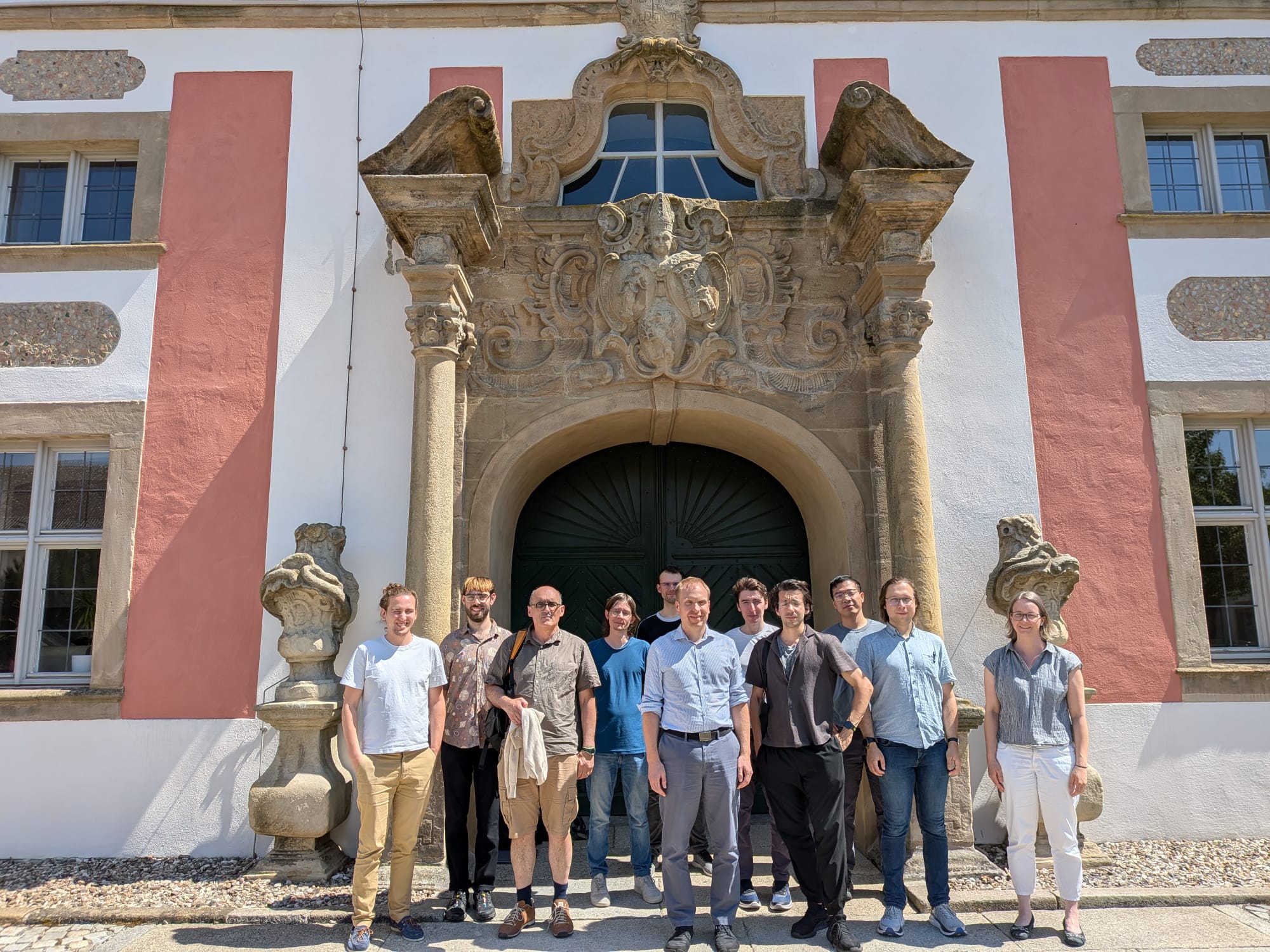
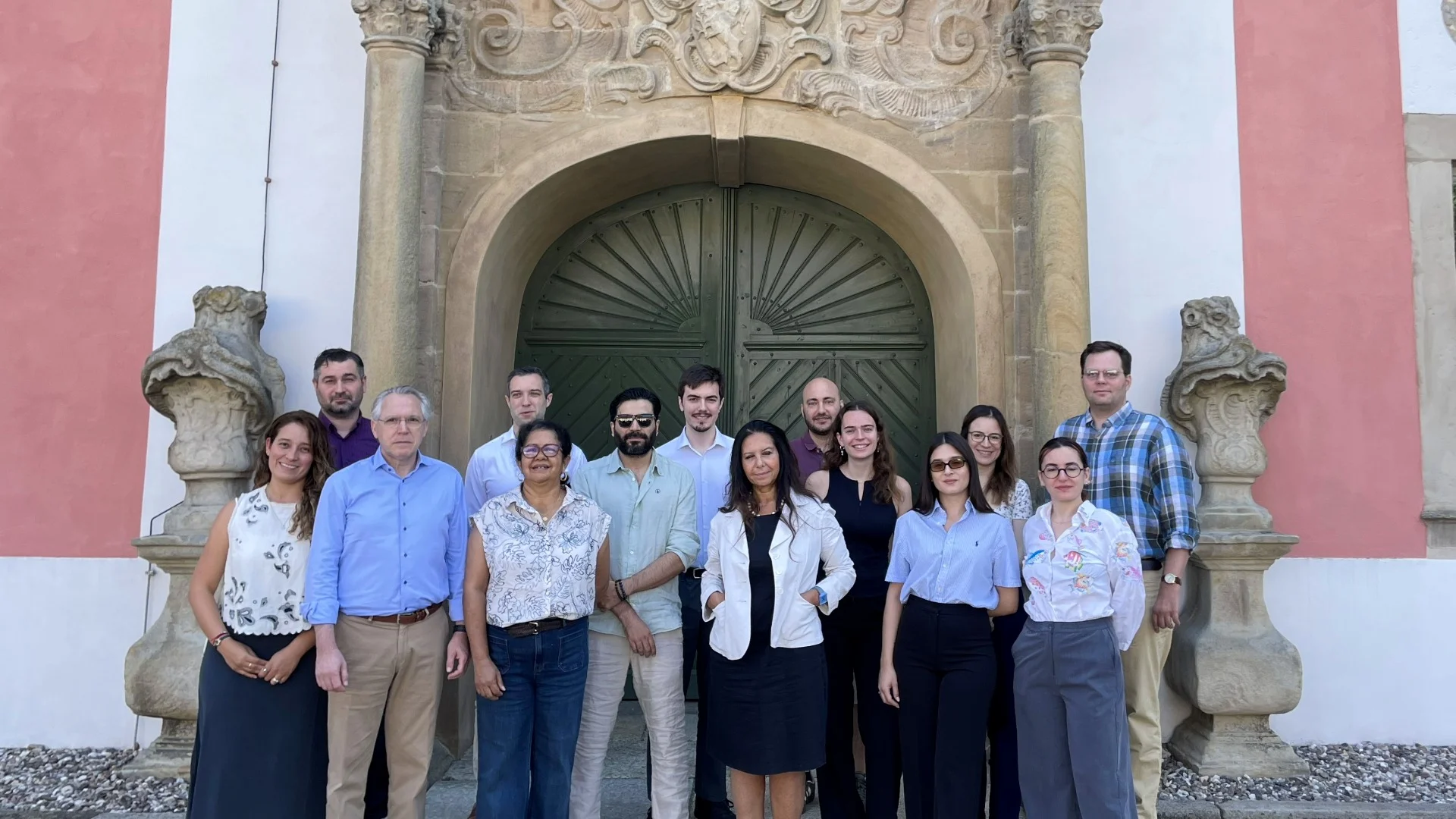
How can we develop artificial intelligence that is not only powerful, but also responsible? This question was at the heart of the eTHIcs Summer School, which brought 27 students from Technische Hochschule Ingolstadt to the Speinshart Scientific Center for AI and SuperTech from 3 to 7 August 2026. Over the course of five days, Speinshart became a place for intensive discussions on the ethical challenges of AI – and for collaborative work on concrete use cases.
At the heart of the Summer School was an approach that understands ethics not as an assessment added only after technological development has taken place, but as an integral part of responsible research and design. The programme was aimed in particular at advanced Bachelor’s and Master’s students from technical disciplines and combined academic input with hands-on work on real-world and realistic AI applications.
Speinshart provided a particularly fitting setting for this endeavour. The combination of the contemplative atmosphere of the monastery and the scientific work of the Speinshart Scientific Center creates an environment in which questions about the technological future can be discussed with the necessary focus, openness and distance. This combination of “retreat and future lab” was already a central idea behind the concept of the Summer School: responsibility should not be understood as a limitation on technological excellence, but as one of its essential components.
From ethical questions to concrete use cases
Following their arrival, introduction and group formation, the participants began by selecting concrete use cases. These served as a common thread throughout the week, allowing the students to apply the different academic perspectives directly to their own questions and to develop their ideas step by step.
One of the methodological focal points was the Ethical Impact Assessment. Prof. Dr. Laura Crompton introduced the participants to this approach on Tuesday morning. Ethical Impact Assessments are designed to identify and evaluate ethical risks and potential consequences of AI systems in a systematic way and to incorporate these considerations into the development process from an early stage. In doing so, one of the central ideas of the retreat became tangible: ethics should not enter the picture only once a technological system has already been developed.
In the afternoon, the programme turned to fairness – an area that demonstrates particularly clearly how closely technical and societal questions are intertwined. Matthias Uhl explored the topic before the participants continued working on their own use cases. The underlying concept of the Summer School explicitly understands fairness as more than a mathematical problem: deciding what should count as “fair” is itself a normative choice.
Explainable AI, study design and human factors
On Wednesday, the programme addressed the question of how decisions made by AI systems can be made transparent and understandable. Lena Kästner led the morning session on Explainable AI. Explainability is not only a matter of technical methods: an explanation can be technically correct and yet remain incomprehensible or even misleading to those affected. Explainability is therefore also a question of communication and trust.
In the afternoon, Megan Smith introduced another perspective on responsible research with a session on Ethical Study Design. Once again, the academic input was followed by work on the participants’ own use cases – reflecting the interplay of scientific input, discussion and practical application that shaped the entire week.
Thursday focused on UX Design and Human Factors. The session with Sven-Anwar Bibi shifted attention towards the interface between people and technological systems. Ethical questions do not arise solely from the underlying AI model: interfaces and interaction design can also influence behaviour, shape trust and contribute to poor decisions. The retreat therefore deliberately broadened the perspective to include questions surrounding autonomy, nudging, dark patterns and human–AI interaction.
Time to think – and time to connect
A retreat, however, is about more than an intensive academic programme. The days in Speinshart also provided space for personal encounters and informal exchange. Shared evening activities – ranging from a getting-to-know-each-other session to watercolour painting, yoga and jam making – complemented the academic work. Each programme day concluded with a joint wrap-up session.
This combination is an important part of the idea behind Speinshart: academic encounters should not consist of presentations alone, but should create spaces in which ideas can develop further, perspectives can shift and new connections can emerge.
On Friday, the Summer School concluded with reflection, feedback and a final session. Yet the broader objective extends well beyond the five days spent in Speinshart. The eTHIcs Digitalisation College seeks to connect students from different disciplines and to further strengthen engagement with applied AI ethics in Bavaria.
For the Speinshart Scientific Center, the eTHIcs Summer School was a wonderful example of what this place is designed to enable: bringing together people who not only advance technological development, but also ask how it can be shaped responsibly.