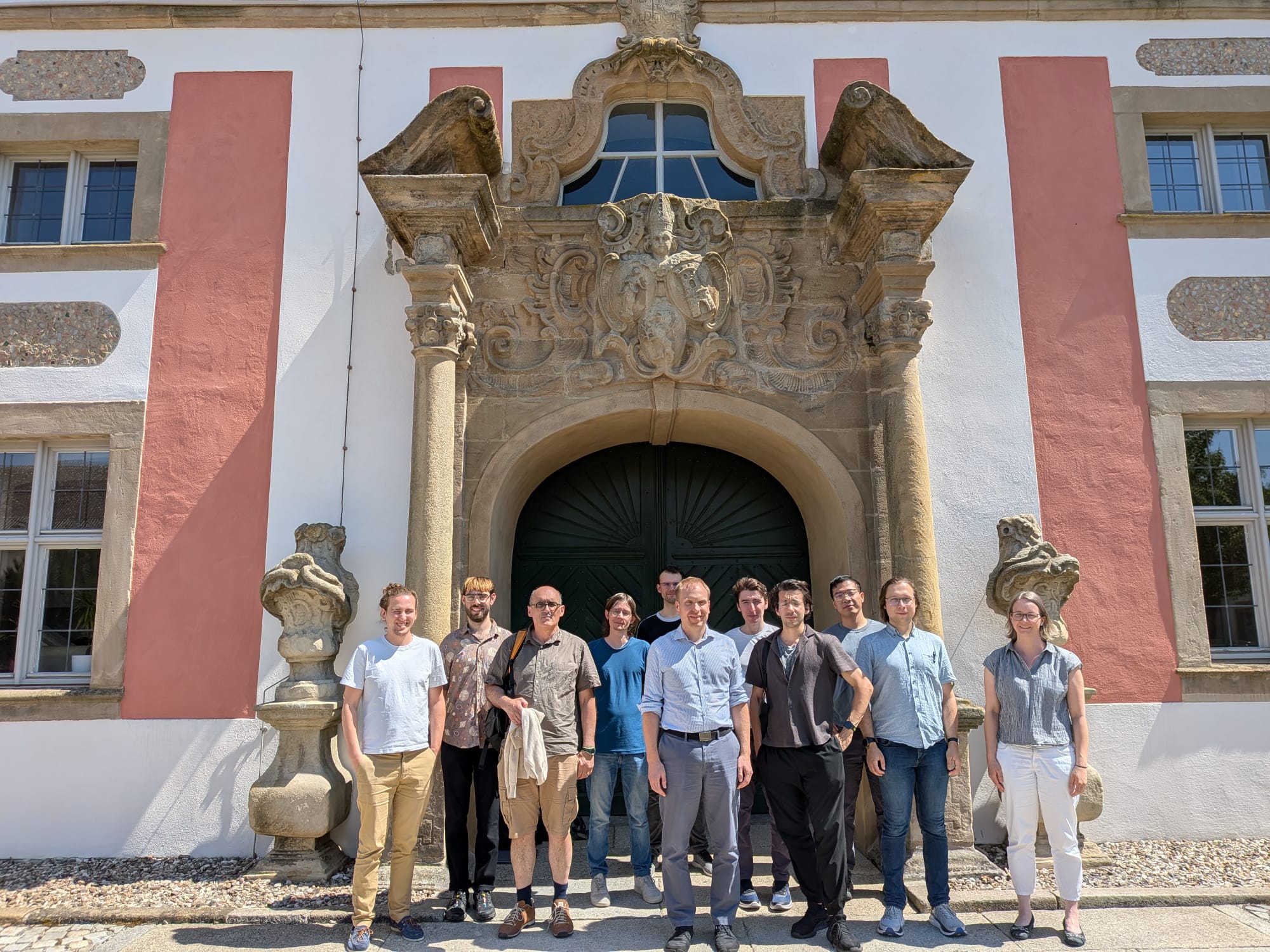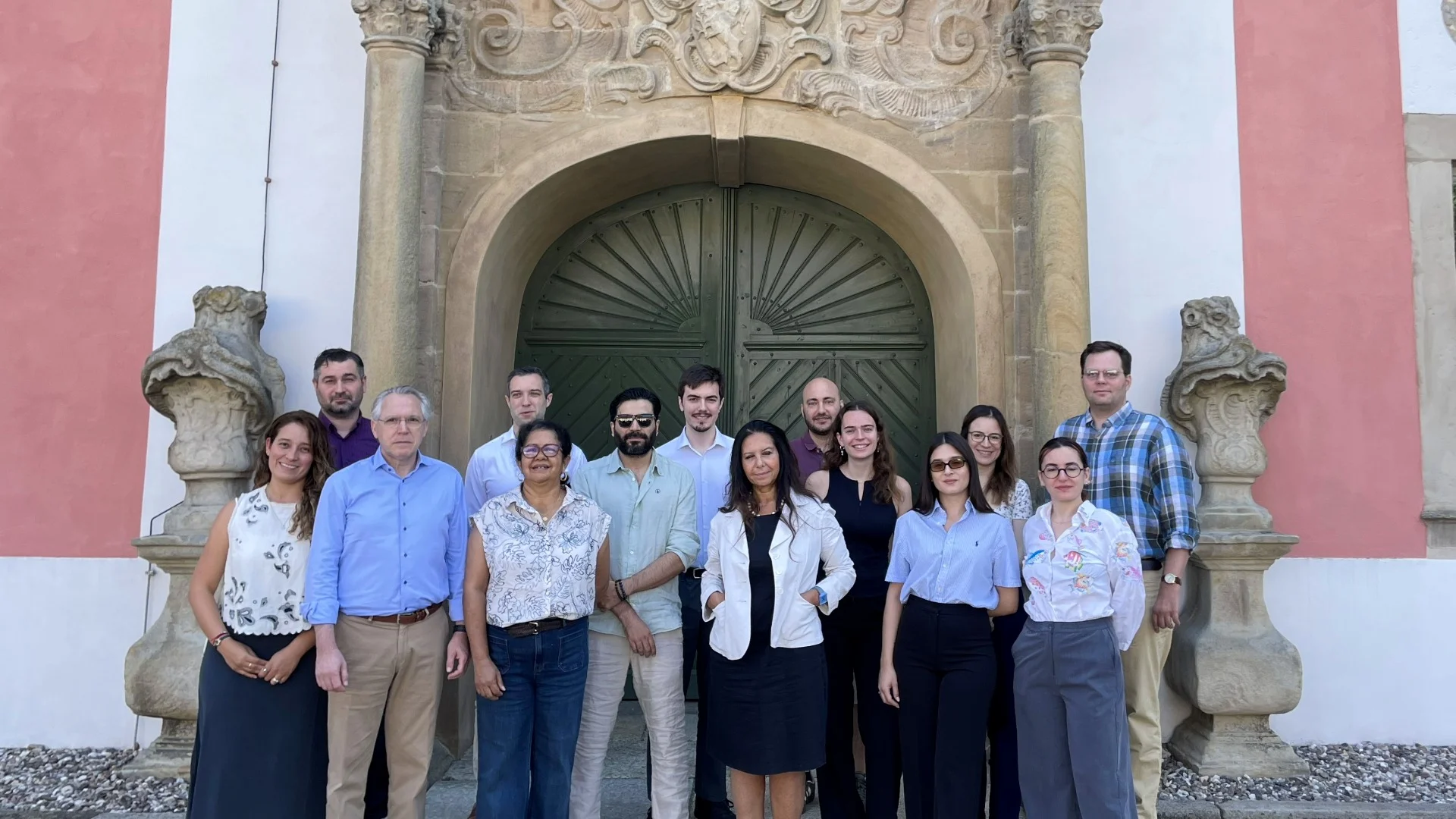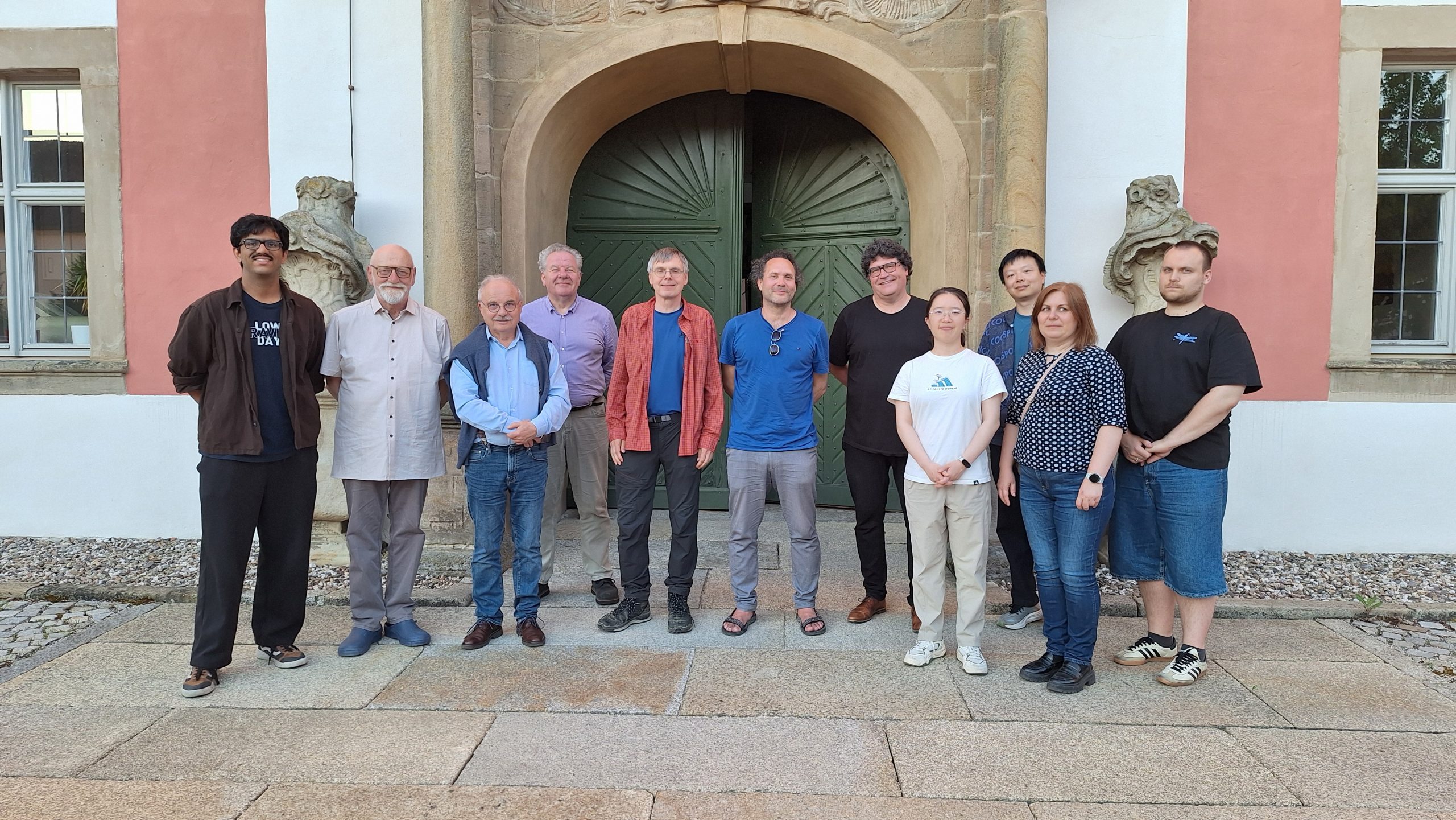
What happens when you bring together world-class experts in applied mathematics, machine learning, and computational sciences in a historic Bavarian monastery? You get three days of intense collaboration, cutting-edge insights, and groundbreaking discussions on the future of AI in science and engineering!
From May 27 to May 29, 2026, SSC hosted the international workshop “Deep Learning and Design and Control of Partial Differential Equations”. Organized by the committee of Martin Gugat and Jan Sokolowski, the event was a resounding success, bridging the gap between rigorous mathematical analysis and the fast-paced world of artificial intelligence. The schedule was packed with a brilliant mix of theoretical frameworks, numerical optimization, and real-world applications.
Day 1: Shape Optimization & Uncertainties
After a warm welcome, the academic sessions kicked off on Wednesday morning with a deep dive into mathematics.
- Helmut Harbrecht (University of Basel) opened the lecture series with Shape optimization under uncertainties.
- Michael Stingl (FAU) kept the momentum going, presenting his insights on Uncertainty-informed shape optimization.
- After a traditional lunch, Tadeusz Burczynski shifted the focus to materials science with a fascinating afternoon talk on AI in design new 2D materials.
Day 2: Grids, Healthcare, and Software
Thursday expanded the horizon into industry and medicine.
- Florian Scheit (Analysing Specialist at TenneT) provided a real-world perspective on Germany’s development grid, highlighting the Opportunities and Challenges for Deep Learning.
- Prof. Jacques Hubert (French Academy of Medicine / University of Lorraine) bridged the gap into healthcare with a compelling lecture on AI and medicine.
- The afternoon featured Michael Schuster (FAU) discussing Probabilistic constraints in optimal design, followed by an interactive project work session and software presentation led by Prof. Michał Nowak.
Day 3: Banach Spaces & Wrapping Up
Friday morning concluded the lecture series with high-level theory:
- Daniel Walter (Humboldt-Universität zu Berlin) spoke on Optimization in reproducing kernel Banach spaces.
- Co-organizer Jan Sokolowski (University of Lorraine) closed out the scientific program with Optimal control and shape optimization.
Community, Diversity & Collaboration
Beyond the rigorous lectures, the workshop thrived on its community spirit. Evenings were left open for social activities organized by the participants, fostering organic networking and collaborative brainstorming. With an international roster of confirmed attendees – including participants from Erlangen, Basel, Berlin, Aachen, Darmstadt, Poland, and France – the event truly embodied a global, interdisciplinary effort.