“If you’ve ever wondered what can truly be done with real-world healthcare data – this retreat offered a compelling answer.”
(Prof. Dr. med. Alexander Hann)
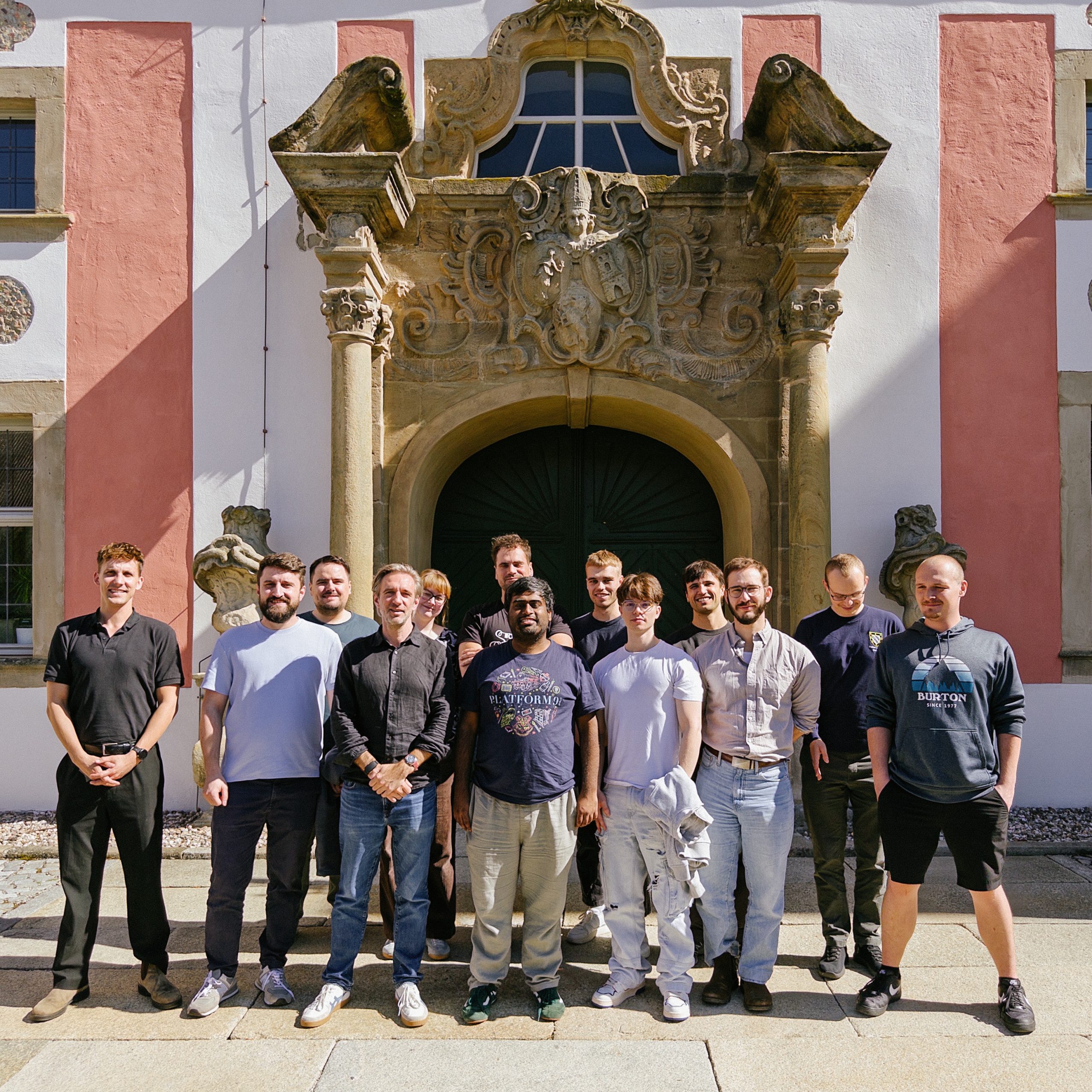
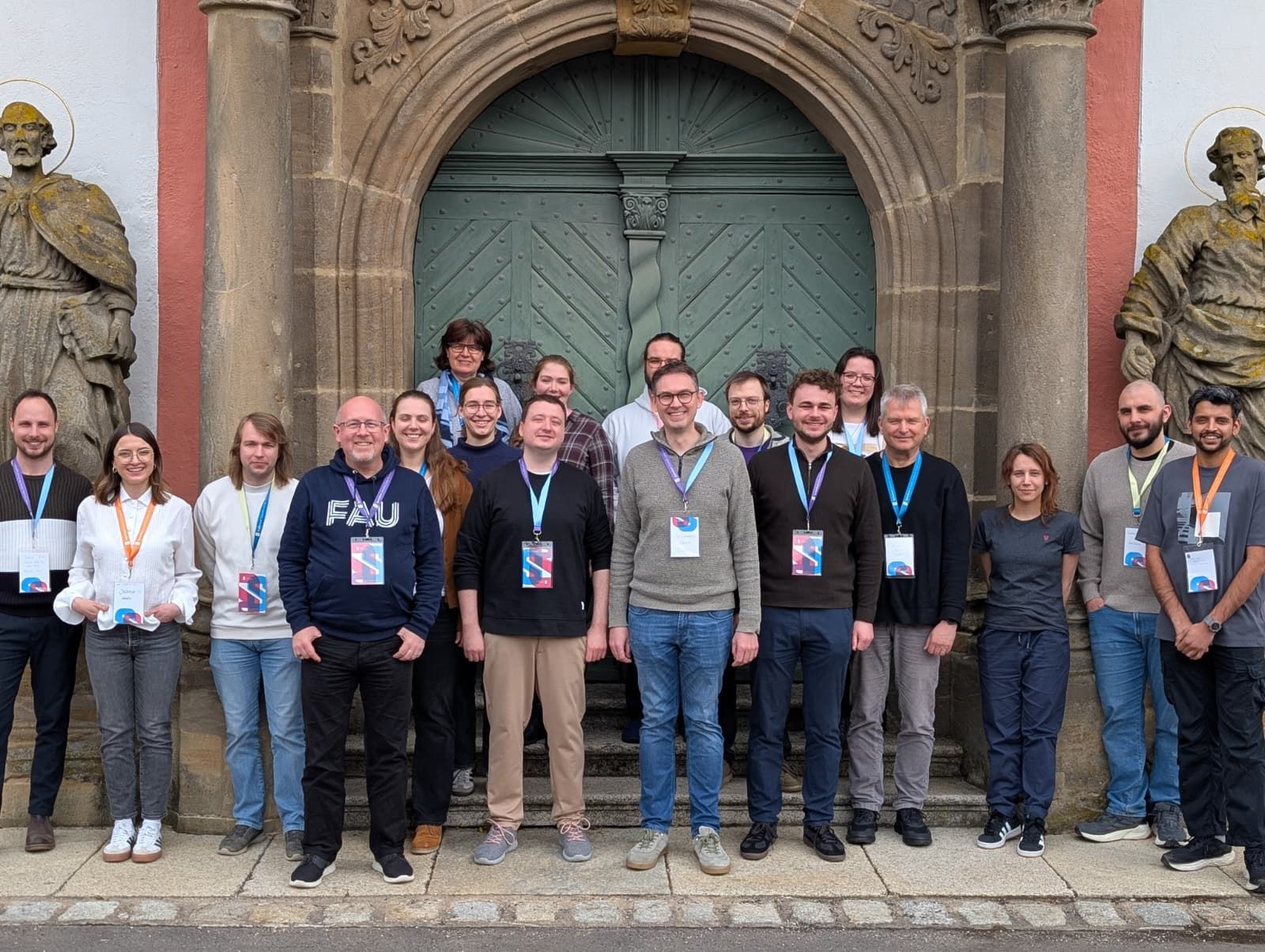
For five days, the Speinshart Scientific Center for AI and SuperTech became a hub for a unique constellation of minds: clinical experts, AI researchers, data scientists, and early-career investigators from all six Bavarian university hospitals came together under the BZKF Lighthouse “AI & Bioinformatics.” Enabled through the collaboration of “BAIOSPHERE X Speinshart”, the goal was clear: to turn existing data into tangible progress for cancer care.
A Shared Data Foundation, A Shared Mission
At the heart of the retreat was a dataset rarely seen at this scale: harmonized real-world data from over 300,000 cancer patients across Bavaria – decades of clinical practice integrated across institutions.
The question was no longer whether insights could be generated, but how quickly and how deeply.
A central focus was the development of AI-based trajectory models – approaches that capture the temporal sequence of diagnostics, treatments, and outcomes. The aim is to identify common treatment pathways, detect deviations, and understand how these influence patient outcomes.
The concrete use case: younger prostate cancer patients with aggressive Gleason scores. A subgroup where individual centers often lack sufficient case numbers – but where pooled data enables statistically robust and clinically meaningful analyses.
From Prostate Cancer to Palliative Care: Interdisciplinarity in Action
What truly set the retreat apart was the breadth of clinical questions addressed. Work spanned across:
- Prostate cancer
- Acute myeloid leukemia (AML)
- Colorectal cancer
- Palliative care
This diversity brought multiple perspectives to the table – and that was precisely the strength of the format. Clinical reality met methodological innovation. Questions from everyday care were translated directly into modeling strategies.
A second dataset, comprising around 3,000 colorectal cancer patients with detailed histopathological annotations, opened further avenues for cutting-edge AI applications in classification, grading, and outcome prediction. Particularly exciting was the vision of combining histopathological data with granular clinical trajectories – laying the groundwork for scalable precision oncology.
An Intensive Format: Working, Not Just Talking
This was deliberately designed as a working retreat. And it delivered exactly that.
Following a joint kick-off with dataset presentations and clinical insights, participants moved quickly into focused breakout sessions. Small, dedicated groups worked in parallel on:
- Data extraction and harmonization
- Model development and architecture
- Concrete analytical pipelines
Regular cross-group sessions ensured that synergies were identified and leveraged. Ideas were not just discussed, but were tested, refined, and sometimes discarded in real time.
The overarching goal: to push promising analyses far enough to form the basis of high-impact publications.
Beyond Results: Building a Functional Network
Beyond the scientific progress, one thing became especially clear: collaboration across institutions and disciplines works and it is essential.
Different perspectives, one shared goal: improving patient care through the intelligent use of real-world data.
The BZKF is demonstrating what modern oncology research can look like: networked, data-driven, and deeply patient-centered.
Conclusion
The retreat in Speinshart was not a typical workshop, but a productive prototype for the future of cancer research in Bavaria!
If you wanted to understand the true potential of real-world data, all you had to do during those five days was step into any room – somewhere, people were actively turning data into better medicine.
And this is only the beginning.