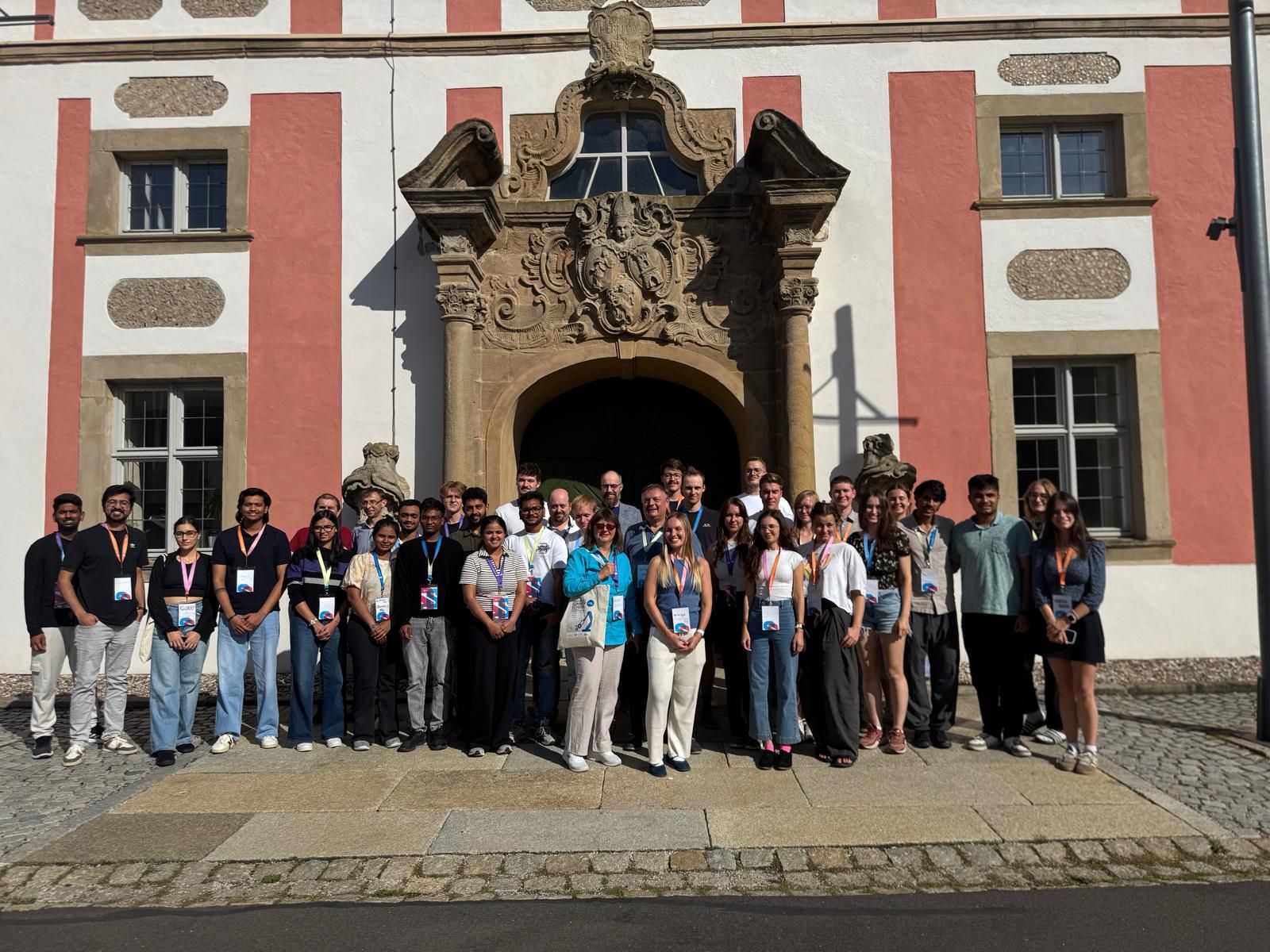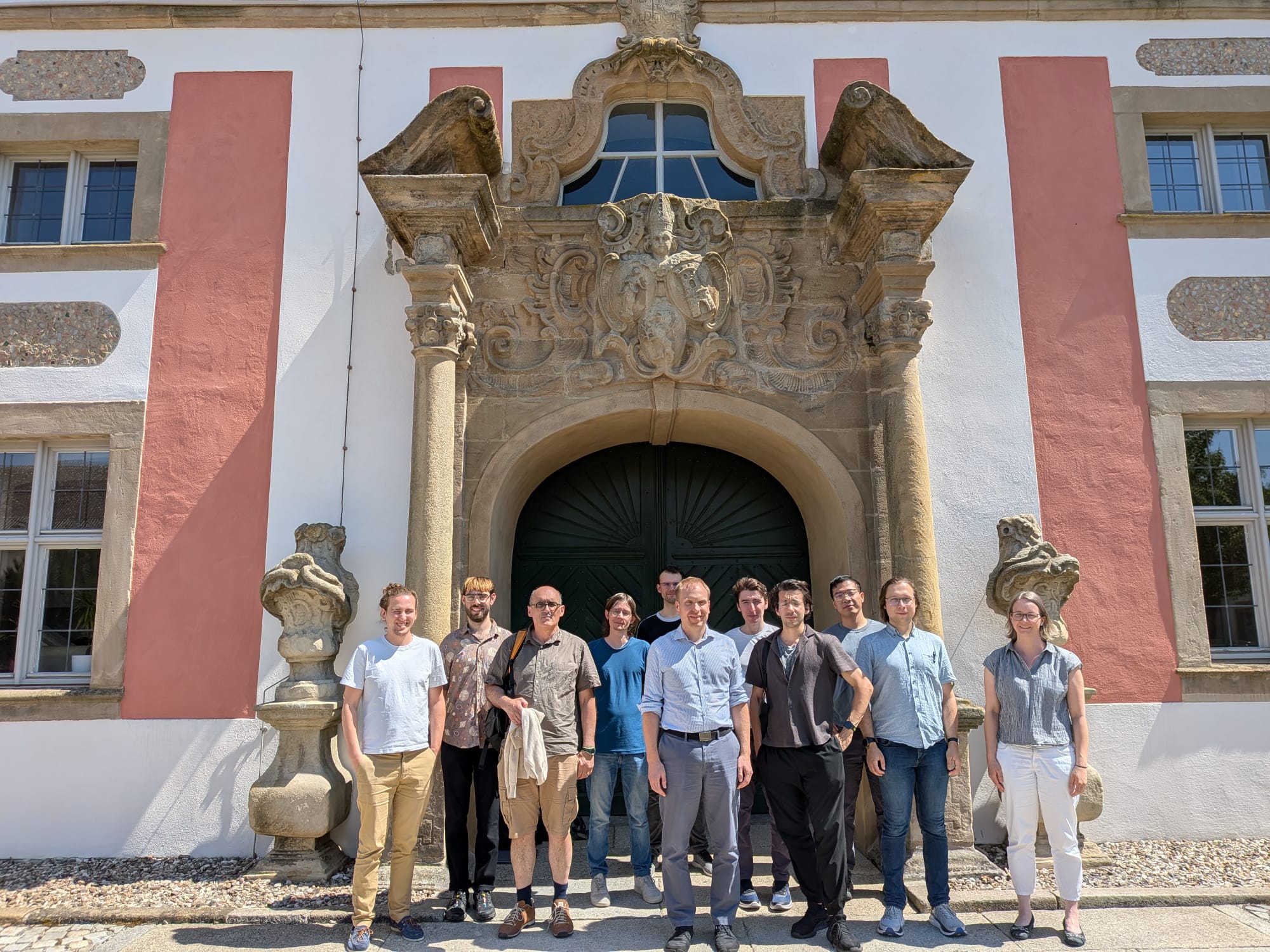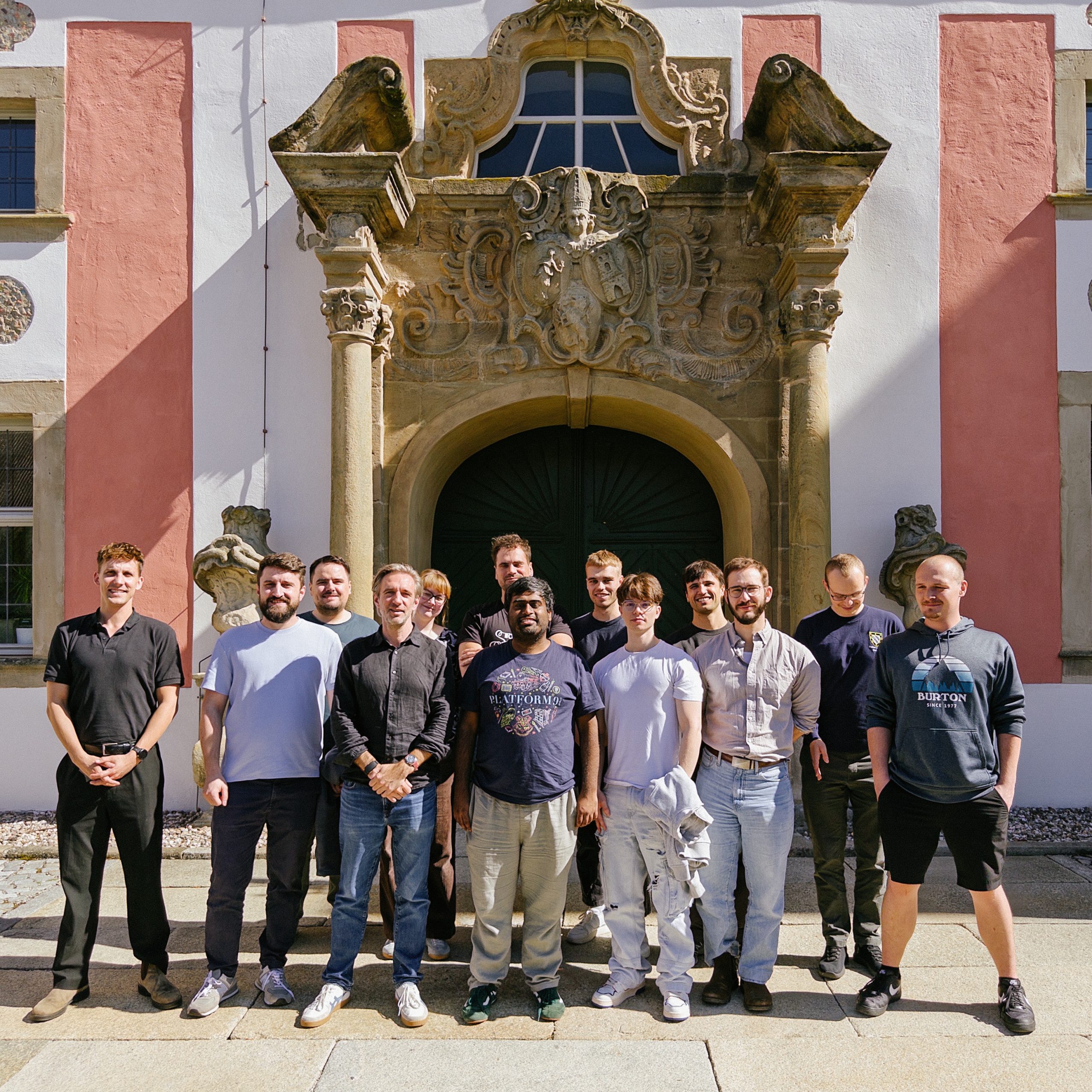
How can artificial intelligence become more than just a productivity tool for researchers? A recent retreat at the Speinshart Scientific Center for AI and SuperTech brought together experts in mathematics and AI to explore how agentic systems could reshape the scientific process itself.
Large Language Models have rapidly become part of everyday academic work. Researchers use them to write code, brainstorm ideas, explore literature, and assist with a growing range of routine tasks. Yet the more consequential question is only beginning to emerge: How should AI be integrated into research in a way that genuinely advances scientific thinking rather than simply accelerating existing workflows?
This question was at the heart of a recent retreat on Agentic AI in Mathematics hosted at the Speinshart Scientific Center for AI and SuperTech. Initiated by researchers from the Zuse Institute Berlin (ZIB) and its Interactive Optimization and Learning Lab, the workshop brought together expertise from mathematics, artificial intelligence, optimization, automated reasoning, and scientific computing. The underlying ambition was to move beyond established uses of LLMs and examine more advanced forms of AI-supported research.
Beyond the AI Assistant
The workshop started from the observation that AI is undergoing a fundamental shift in science: from being primarily an object of research to becoming an increasingly important part of the research process itself.
The organizers distinguish between several stages of this development. The first — already familiar to many researchers — involves using LLMs for tasks such as idea generation, coding, and general assistance. More experimental approaches go considerably further: AI systems can help search for mathematical structures, generate examples or counterexamples, identify potentially relevant patterns, and ultimately interact autonomously with formal and numerical tools.
Rather than concentrating on everyday LLM use, the retreat therefore focused on these more advanced forms of human–AI collaboration. One central topic was AI-guided mathematical search. Could optimization methods and generative AI be used to produce mathematical objects that are not merely interesting computational results, but genuine starting points for new human insights? Examples might include extremal configurations, counterexamples, unexpected symmetries, or particularly difficult problem instances. The challenge is to design such searches in a way that makes their results interpretable and scientifically meaningful rather than accidental.
A second focus concerned autonomous research workflows. Here, the question shifts from individual AI-generated suggestions to systems capable of planning and carrying out sequences of scientific actions: generating hypotheses, designing experiments, interacting with computer algebra systems or theorem provers, evaluating results, revising assumptions, and documenting the reasoning process along the way.
Productivity Is Not the Only Metric
The discussions also reached beyond technical questions.
If AI increasingly becomes part of scientific reasoning, researchers need to think carefully about the intellectual consequences of that shift. Greater speed does not automatically mean better research. Participants therefore discussed how AI can be used without accumulating cognitive debt — outsourcing so much of the intellectual process that understanding gradually becomes shallower — and how researchers can actively maintain sufficient cognitive coverage of the problems on which they work.
This changes the central question from “What can AI do for us?” to something more demanding:
How can we design AI-supported research practices that extend human scientific capabilities while preserving understanding, critical judgment, reproducibility, and intellectual ownership of the research process?
There are no definitive answers yet. That was precisely the point of the retreat.
Working in a small and highly interactive format, participants examined concrete mathematical cases, challenged emerging concepts, and discussed possible principles for trustworthy scientific agents. The original workshop concept envisaged not only technological prototypes, but also broader methodological foundations: evaluation criteria, documentation standards, reproducible workflows, and potential benchmarks for AI-supported mathematics.
A Place to Slow Down — and Think Further
Questions of this kind benefit from a particular kind of environment. They require time for concentrated discussion, room for disagreement and experimentation, and opportunities to step outside the rhythm of everyday academic work.
This is precisely what the SSC aims to provide.
Over the course of the retreat, Speinshart became a temporary laboratory not only for new AI systems, but for thinking about the future practice of science itself. The combination of concentrated working sessions, informal exchange, and the tranquillity of the monastery setting offered participants the opportunity to slow down while engaging with a field that is developing extraordinarily quickly.
As Sebastian Pokutta, Vice President of the Zuse Institute Berlin and Professor at TU Berlin, reflected after the retreat, the group may not have left Speinshart with definitive answers — but with new ideas, insights, and questions that will shape their work in the months ahead.
And perhaps that is exactly what a successful research retreat should accomplish.
We were delighted to welcome the group to Speinshart and look forward to seeing where these discussions on AI, mathematics, and the future of scientific discovery lead next.