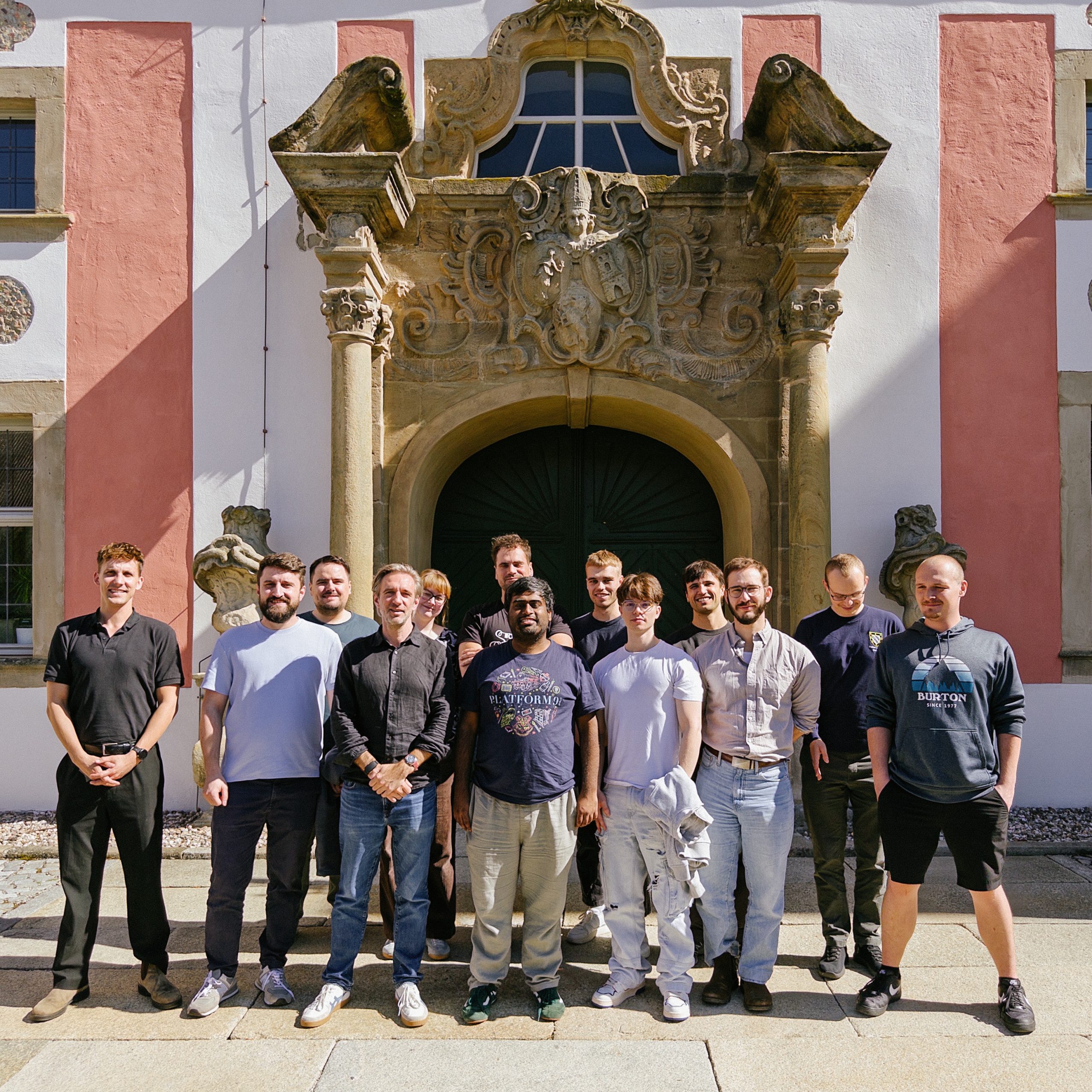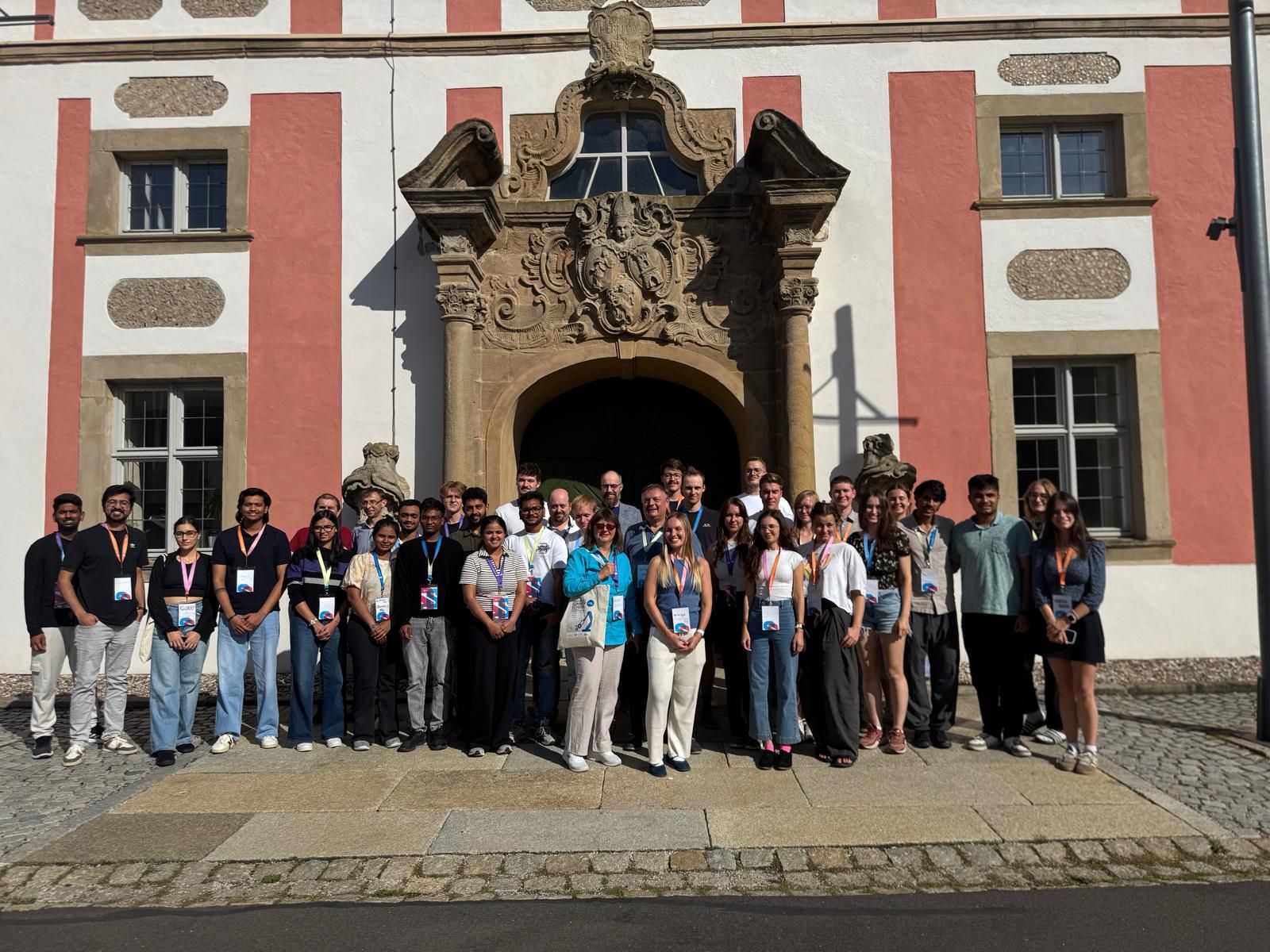
How can artificial intelligence be used effectively not only by large corporations, but also by small and medium-sized enterprises? This is the central question addressed by “KI-Regio – Artificial Intelligence for Regional Value Chains”, a project at the University of Würzburg. From 21 to 23 September 2026, the Data-driven Decisions Group (D3) joined us at the Speinshart Scientific Center for AI and SuperTech for a three-day Speinshart Seminar.
Launched in 2024, the EU-funded KI-Regio project aims to bridge the gap between cutting-edge research in artificial intelligence and its practical application in small and medium-sized enterprises. Based at the Center for Artificial Intelligence and Data Science (CAIDAS) at Julius-Maximilians-Universität Würzburg, the D3 Group brings together more than 28 researchers and collaborates with over 65 companies across the Mainfranken region. Together, they are developing concrete AI-based applications designed to make processes more efficient, reduce costs, and improve sustainability.
The project is about more than technological innovation alone. KI-Regio also seeks to strengthen collaboration between regional businesses and academia, provide accessible entry points to data-driven technologies, increase efficiency in business processes, and use AI to reduce waste and emissions. Existing use cases include AI-supported forecasting and pricing models as well as approaches to inventory optimization.
The retreat in Speinshart focused in particular on the transition from initial pilot applications to scalable solutions and the development of a long-term regional AI ecosystem. Over the course of three days, the researchers critically reviewed ongoing projects, further developed their research strategy for the coming years, and discussed how successful approaches could be transferred to additional SMEs. Knowledge transfer was another important topic: among other things, the project aims to develop training formats that introduce managers without a technical background to topics such as large language models and AI-supported business processes.
The working programme was correspondingly diverse. Alongside research presentations and strategic discussions, the agenda included in-depth analyses of existing pilot projects, a code sprint, a hackathon, and the planning of future research and transfer activities. The seminar concluded with the definition of concrete next steps and responsibilities for the months ahead.
Speinshart offers particularly well-suited conditions for this kind of concentrated collaborative work. In its proposal, the D3 Group explicitly highlighted the combination of a quiet environment away from the routines of everyday university life and a modern scientific infrastructure. At the same time, the historic setting was seen as a particularly fitting match for the project’s ambition: bringing tradition and future technologies together — much like KI-Regio itself seeks to integrate new AI applications into established regional business structures.
For the Speinshart Scientific Center, it was therefore a great pleasure to welcome the researchers from the University of Würzburg for these intensive days of exchange and collaboration. Events such as this reflect one of the central aims of our Center: to provide researchers with the space to develop new ideas, critically reflect on existing approaches, and jointly prepare the next steps for projects of scientific and societal relevance.
We would like to thank the Data-driven Decisions Group at Julius-Maximilians-Universität Würzburg for joining us in Speinshart and for the fascinating insights into KI-Regio. We wish the entire team every success as they continue to advance artificial intelligence for regional value chains.